
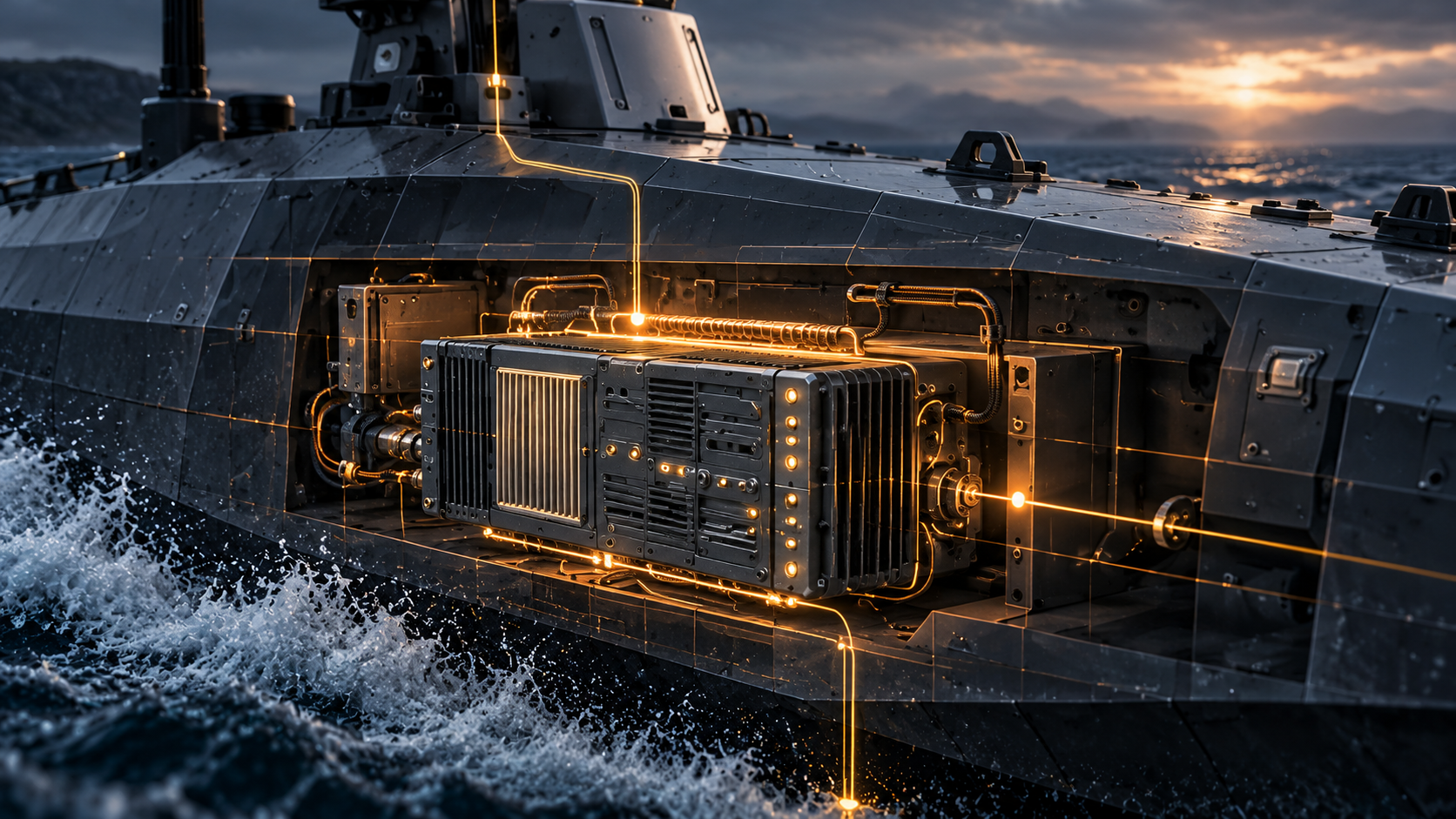
On 13 October 2026, maritime machine-vision company SEA.AI announced that MARTAC had integrated its technology into its unmanned surface vessels. The system processes optical and thermal imagery locally, classifying contacts and providing information about their type, heading and proximity. For surveillance and patrol missions, this allows the vessel’s systems to receive interpreted observations without waiting for a remote operator to examine every image. The announcement describes an integration, however, and provides no independent performance assessment or detailed account of the decisions delegated to the vessel.
The development illustrates a broader shift in maritime autonomy. Unmanned vessels are increasingly able to interpret sensor observations aboard the platform and supply the results directly to navigation and mission software. This can shorten the interval between detecting an event and responding to it, while reducing the communications and personnel needed to sustain operations.
What “Onboard AI” Means“Onboard AI” describes where this processing happens. A trained model runs on a computer aboard the vessel, sometimes within a sensor package and sometimes on a shared processor. Inference is the application of that model to new observations; it does not necessarily involve learning or modifying the model during a mission. Nor does it require a conversational AI system. Specialist detection and classification models can perform narrowly defined tasks.
The underlying approach is already established. In July 2023, NVIDIA described Saildrone’s use of onboard Jetson modules for image-based vessel detection. Machine learning ran primarily locally because transmitting high-resolution sensor imagery over satellite links consumed limited, expensive bandwidth. Human operators continued to monitor the vessels and could change their routes remotely. Local inference and human supervision therefore operated together.
Integration Across Vessel PlatformsWhat recent integrations suggest is that AI perception is becoming a component that different vessel builders can adopt. At REPMUS 2026, SEA.AI reported trials involving Maritime Robotics, SYOS SM300 vessels, the Portuguese Navy’s Shiver and Polar Mist platforms. Using a common perception system across different hulls and autonomy architectures could reduce duplicated development and make advanced sensing more accessible to smaller manufacturers. The trials demonstrate integration activity, rather than universal reliability across operational conditions.
This development extends beyond cameras. Charles River Analytics’ AutoTRap Onboard applies deep learning to sonar data aboard autonomous underwater vehicles. According to the company, the software has been developed, tested and deployed on Teledyne Gavia vehicles. It supplies object classifications, positions and detection confidence to downstream systems, enabling a vehicle to investigate a contact during the same deployment instead of returning for analysis and receiving a revised mission.
From Detection to Adaptive MissionsThat example shows how onboard interpretation can support adaptive missions. A vehicle authorised to investigate a suspicious seabed object can collect another view while it is still nearby. On the surface, a similar architecture could connect contact detection to route adjustment or additional observation. Each action still depends on the capabilities and permissions of the navigation and mission systems receiving the AI output.
There is evidence of that connection entering formal qualification processes. In March 2026, Orca AI reported ClassNK Technology Qualification for its perception capabilities within Japan’s DFFAS+ autonomous shipping project. Three optical and thermal SeaPod units provide tracked contact data to the autonomous navigation system. The qualification concerns a defined application and scope, but it demonstrates how AI perception is being evaluated as an input to navigation decisions.
Operational BenefitsThe operational opportunities are considerable. Local processing removes the communications round trip from immediate perception tasks. Vessels can transmit selected images, contact tracks and alerts, reducing bandwidth requirements. Operators may be able to concentrate on unusual situations rather than continuously watching video, potentially allowing a team to supervise more platforms. During communications disruption, onboard perception can remain available, although safe mission continuation also requires functioning navigation, control and fallback procedures.
Reliability and Security RisksThese capabilities also change the consequences of error. A mistaken classification displayed to an operator can be questioned. When connected to automatic control, the same error may influence a manoeuvre or mission change before anyone ashore sees it. Research on maritime perception identifies fog and differences between training imagery and real sea conditions as significant reliability challenges. A confident output cannot substitute for testing across the vessel’s intended operating environment.
Combining cameras, radar and acoustic sensors can improve the available evidence, provided the system handles disagreements and sensor failures explicitly. Several sensors may also suffer from the same environmental limitation. Separately, machine-learning systems introduce exposure to manipulated inputs, compromised models and poisoned training data, recognised categories of attack in NIST’s adversarial machine-learning taxonomy. These are risks to assess, rather than demonstrated vulnerabilities in the systems described here.
The Question of AuthorityFor military vessels, the most consequential decisions concern authority. Detecting a small boat, classifying its behaviour as suspicious and authorising force require different evidence and safeguards. Improved perception alone establishes neither hostile intent nor sufficient grounds for engagement.
Onboard AI can give unmanned vessels greater independence by allowing them to interpret observations and respond within defined limits. Its operational value will depend on how those limits are set: which actions are permitted, when uncertainty requires human review, and what the vessel does when communications or sensors fail. Those decisions will determine whether more capable perception produces more dependable autonomy.
Explore stories by subject ↗