
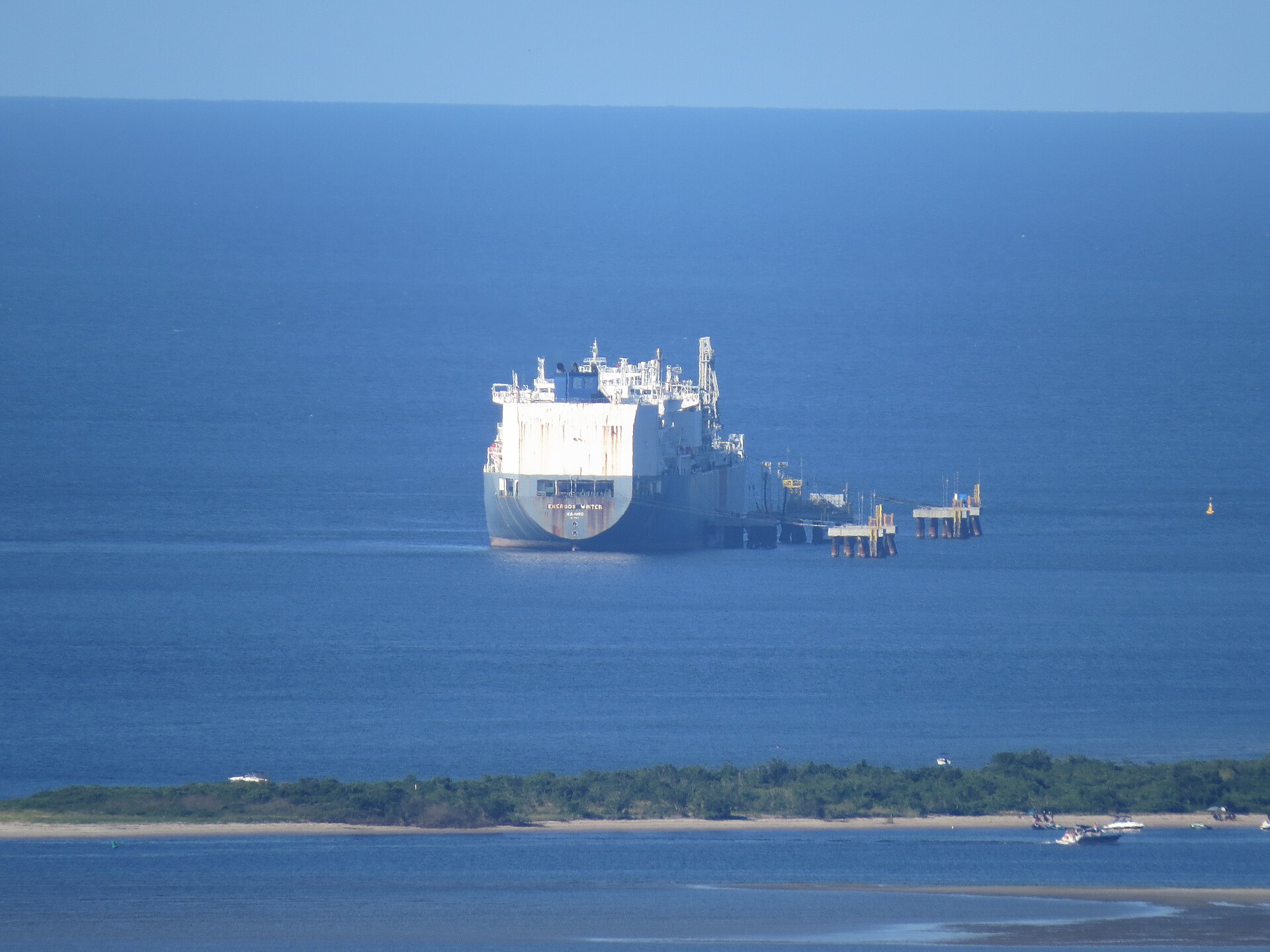
The attack in late July on the US-owned vessel Energos Winter at Egypt’s port of Damietta was more than a local security incident. Although the attackers have not been officially identified, the choice of target, the nature of the attack and its strategic implications point to a broader trend: the emergence of a new front in the battle over energy infrastructure, with drones as a central weapon.
On 29 July, a drone struck Energos Winter, a floating storage and regasification unit used to receive liquefied natural gas (LNG) for Egypt’s energy system. The strike caused a fire that spread to the LNG carrier GasLog Salem, which was alongside it unloading cargo. Firefighters brought the blaze under control before it became a larger disaster, and no one was injured. Energos Winter, however, was taken out of service and sustained significant damage.
Egyptian authorities described the incident as a deliberate drone attack rather than a technical failure. No group has claimed responsibility. The attack took place amid the regional confrontation between Iran and the United States, and Western assessments have linked it to a wider effort to undermine the security of Middle Eastern energy routes.
The significance of the incident lies not only in the damage to the vessel, but also in its location and the choice of target. Until now, most threats to regional shipping have centred on the Red Sea, the Bab el-Mandeb Strait and the Persian Gulf. The Damietta attack, by contrast, took place at the heart of Egypt’s energy infrastructure on the Mediterranean coast. It suggests that areas considered relatively safe until recently may also become part of the conflict.
The message is clear: the contest is no longer focused solely on tankers moving through shipping lanes. Strategic energy assets, including LNG terminals, storage facilities, floating regasification units and the infrastructure that supports electricity and fuel supplies for entire countries, are also potential targets. For Egypt, which has become more dependent on LNG imports in recent years as output from the Zohr gas field has declined, the vessel was an asset of national importance. Beyond its local impact, the attack fits a wider global trend: drones are becoming a principal weapon in attacks on the energy sector.
In recent years, drones have been used to attack Aramco’s oil facilities in Saudi Arabia, oil facilities in Russia, gas infrastructure in Ukraine, power facilities across Europe, and tankers and merchant ships in the Red Sea. What these incidents share is an effort to disrupt supply chains, market stability and infrastructure operators’ sense of security, as well as to damage the immediate target.
The reason is straightforward. Drones offer an unusual combination of low cost, long range and precision. They can strike targets of immense economic value with weapons that cost far less than the assets they threaten. For states and armed groups alike, this is a force multiplier that changes the traditional cost-benefit calculation of protecting critical infrastructure.
The Damietta attack also illustrates a new operational challenge. Floating storage and regasification units, LNG terminals and energy ports were designed to cope with accidents, fires and certain security threats. They were not designed around precise drone attacks that can arrive from different directions, at low altitude and with little warning. Protecting energy infrastructure therefore requires more than physical security and naval patrols. It calls for a combination of detection systems, electronic warfare, layered interception and real-time intelligence.
The Damietta incident may ultimately be remembered less for the scale of the damage than for what it represents. The struggle over energy once centred on pipelines, tankers and maritime chokepoints. Today, a single drone can make a strategic facility a target. As the technology spreads and becomes more accessible, attacks of this kind are likely to become a recurring part of the global energy industry’s security landscape.
Explore stories by subject ↗