
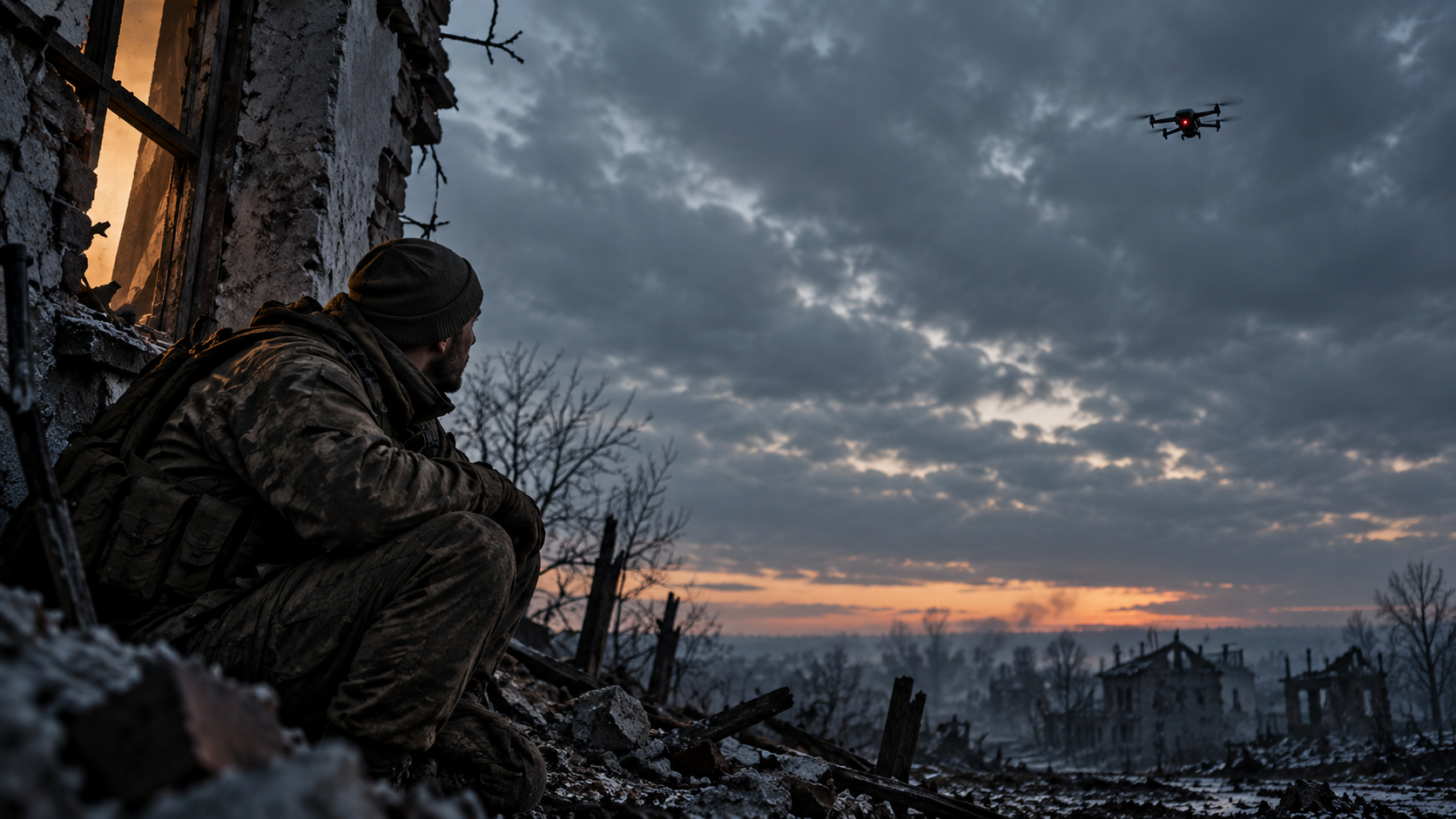
For soldiers in Ukraine, a drone can be present long before it attacks. It may be heard overhead, glimpsed briefly, or suspected from the sound of an engine. It may be watching, searching for a target, or passing through. The uncertainty is part of the threat: troops have to stay alert without knowing whether they have been spotted or when a strike might come.
Ukrainian psychiatrist Serhiy Andriichenko has used the term “drone phobia” to describe severe, persistent fear linked to drones. The term has appeared in reporting about Ukrainian patients, including soldiers, but it is not a recognized diagnosis in international disease classifications. Reported symptoms include panic, exhaustion, heightened alertness and strong reactions to sounds associated with drones or attacks. Researchers are still studying how these experiences relate to PTSD and other trauma responses.
The strain on troops comes from more than the moment of impact. Persistent aerial surveillance can make movement feel dangerous and concealment temporary. A soldier may be safe in a position one minute and exposed the next. Even when no attack follows, the need to listen, scan the sky and anticipate a strike can keep the body in a prolonged state of alert. A 2026 review of drone warfare and PTSD describes persistent surveillance and unpredictable attacks as sources of vulnerability and hypervigilance for ground forces. It also notes that research on troops and civilians exposed to drones remains limited.
The fear can follow soldiers away from the front. Le Monde reported the case of Ukrainian serviceman Oleksandr Dushakov, who experienced a panic attack in Kyiv after returning from combat and hearing about missile and drone strikes on the capital. Explosions and fireworks could also trigger memories of attacks. His case illustrates how a person may leave the battlefield physically while remaining vulnerable to reminders of it. Dushakov was diagnosed with PTSD and an adjustment disorder; “drone phobia” remains a proposed way to describe a particular pattern of fear, not a separate established diagnosis.
Civilians face a related threat with different consequences. In frontline areas such as Kherson, short-range drones can target people moving through streets, travelling in vehicles or working outdoors. Residents may have little warning and few reliable ways to tell whether a drone has noticed them. Le Monde’s reporting from Kherson described streets covered by protective nets and daily civilian casualties, with local officials portraying the threat as a constant feature of life.
The effects can reach people who have not been directly attacked. A 2025 study of Ukrainian parents and children found that parents in regions with high drone-attack intensity were more likely to screen positive for PTSD symptoms than those in regions with low or moderate intensity: 28.9 percent, compared with 25.0 and 20.5 percent. These are screening results, not confirmed diagnoses, and the study found an association rather than proving that drone attacks alone caused the symptoms. The researchers also found connections between parents’ mental-health symptoms and children’s symptoms, suggesting that the strain can affect family life.
Drones intensify a familiar feature of warfare: danger may arrive without warning. Their distinctive sounds, frequent presence and ability to observe or strike from above can make danger feel both distant and immediate. In Kherson, that can mean changing routes, limiting time outdoors or trying to continue ordinary tasks beneath anti-drone netting. For troops, it can mean treating open ground and movement as risks that persist after a particular attack has ended.
“Drone phobia” may or may not become a formal clinical category. The immediate challenge is recognizing that the psychological effects of drone warfare do not stop with those physically injured. They reach soldiers living under surveillance, civilians adapting their daily routines to the sky, and families coping with the consequences. The technology changes who can be watched and attacked; it also changes how long people must live with the expectation that they might be.
Explore stories by subject ↗