
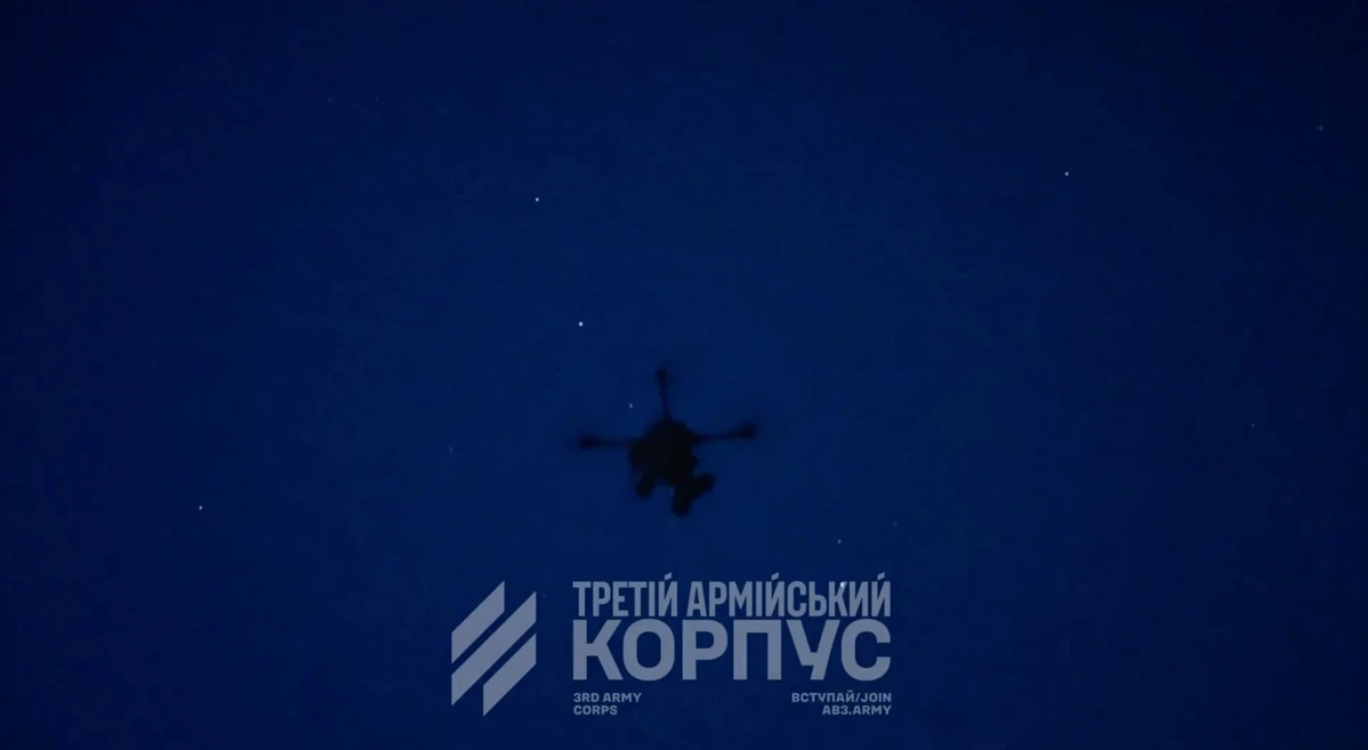
Ukraine’s Third Army Corps has reported using heavy aerial drones to transport explosive ground robots behind Russian lines and deploy them for attacks from the ground. The tactic, used during Operation Vivaldi in northern Donetsk, gives a ground vehicle access to an operating area without requiring it to drive there from Ukrainian positions.
In a statement reported by Ukrainska Pravda on Sep 20, 2026, corps commander Brigadier General Andrii Biletskyi said the robots were delivered more than 10 kilometres into the Russian rear. He described the mission as the first operation of its kind worldwide. The available reporting establishes the Ukrainian military’s claim, but does not independently verify its historical precedence.
The specific innovation is the delivery method: an aerial drone carries a ground robot into the mission area, where the vehicle can undertake the final approach to a target. This gives the two platforms complementary roles, using flight to cover the deployment distance and ground mobility for the subsequent attack.
Bypassing the ground approachAn unmanned ground vehicle travelling from friendly positions must negotiate the terrain along its entire route. Depending on the location, that can mean damaged roads, rubble, vegetation, trenches and other obstacles. Air delivery can bypass part of that journey and place the robot closer to the position it is intended to attack.
The carrier aircraft therefore becomes part of the weapon’s deployment system. Its payload is a mobile ground platform that can continue moving after delivery, rather than a munition whose mission ends when it is released from the aircraft.
This does not eliminate the difficulties of ground operations. The robot must remain functional after deployment, negotiate the landing area and maintain the control needed to complete its mission. Air delivery changes where those challenges begin and reduces the distance the vehicle must cover on the surface.
Ukraine’s presidential office identified the Vivaldi air-delivery tactic as “Gryphon” in a Sep 30, 2026 account of the operation. It described the deployment of ground robotic systems by heavy bomber drones as one of the offensive’s distinctive methods.
A related system developed by frontline soldiersA separate announcement shows another Ukrainian formation developing the same general approach. On Sep 25, 2026, Ukraine’s defence technology cluster Brave1 reported that the Alter Ego ground robotics battalion of the 93rd Separate Mechanised Brigade had created a specialised robot called Desantnyk, together with a mechanism for accurately deploying it from a heavy aerial drone.
Brave1 said the system could be delivered tens of kilometres from the line of contact. According to its account, the process from concept to combat use took ten days, and the robot had already been used in attacks on Russian shelters and personnel. These are reported results from the organisation supporting the development.
The Desantnyk announcement should be treated separately from the Third Army Corps’ Vivaldi deployment. The reports identify different formations and do not establish that they used the same ground vehicle. Together, however, they indicate that more than one Ukrainian unit is working on air-delivered ground attack systems.
Brave1 calls this carrier-and-payload arrangement a “marsupial” system: one unmanned platform transports another to the area where it will perform its task. The organisation also said it had helped Alter Ego find a manufacturer to move Desantnyk from prototypes toward serial production. It did not disclose production quantities or delivery schedules.
What the tactic changesThe operational value lies in separating access to the target area from the final attack. The aerial platform provides transport across terrain; the ground platform provides movement after deployment. That can expand the locations from which a ground robot can begin a mission and reduce the need to expose soldiers while delivering an explosive charge.
It also creates a more demanding chain of dependencies. A successful mission requires the carrier to reach the deployment area, the payload to survive release, and the ground robot to remain controllable and mobile. The supplied accounts do not disclose enough technical detail to assess deployment reliability, communications resilience or the proportion of missions completed successfully.
Nor do they establish autonomous navigation, AI-directed targeting or independent coordination between the aircraft and ground vehicle. The documented novelty is the use of one unmanned system to deploy another for a subsequent ground attack.
For military developers, the next question is whether this can become a repeatable capability. Brave1’s effort to connect a frontline invention with a manufacturer addresses the production side. Wider adoption will also depend on consistent deployment, operator training and performance under enemy countermeasures.
Operation Vivaldi provides a reported combat example of the tactic. Its significance is the extension of a ground robot’s reach through an aerial carrier, allowing an unmanned weapon to arrive by air and continue its mission on the ground.
Explore stories by subject ↗